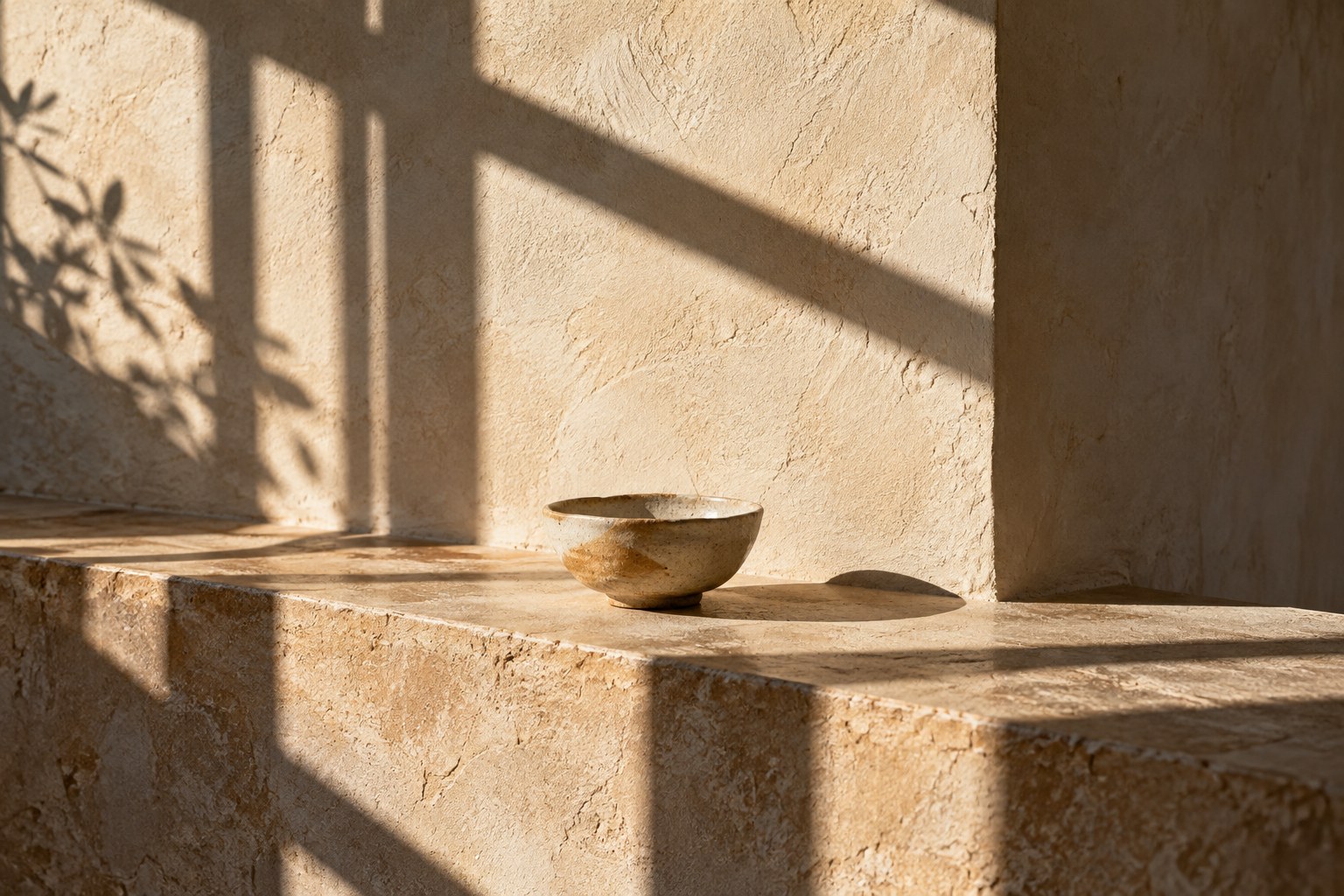
When a scene feels difficult to understand, start with its shadows. They simplify a complicated view into larger shapes. A tree becomes an uneven patch across a path. A window draws a rectangle on the floor. The outline gives your eye somewhere to begin.
Notice the edge before the darkness. A sharp edge often comes from a small, direct source of light; a softer one can come from a wider source or light scattered through a cloudy sky. Move a little and watch the boundary change. You can learn a great deal without making a photograph.
A shadow gives light an edge you can follow.
Then look for colour. A shaded surface reflects the sky, nearby walls and the materials around it. What first appeared grey may carry a little blue, green or warm brown. Give your eyes a moment to adjust before deciding what you see.
For a simple exercise, choose one object near a window and observe it at three different times. Keep your viewpoint similar. Make a note of the direction, length and softness of its shadow. If you take pictures, compare them together rather than judging each in isolation.
You do not have to preserve every detail inside a dark area. Sometimes a broad shape is what makes a composition legible. Let the bright and quiet parts share the frame, and leave enough space for the relationship between them to become clear.